Quote request
Roman Blinds: Style, Light and Practical Use
Roman blinds often look simple at first glance, but in real interiors they behave quite differently compared to more structured window coverings. Many homeowners choose them for their soft appearance, yet the practical side — how they filter light, how they stack, and how they integrate into daily use — is what really defines whether they are the right solution.
Instead of focusing on features alone, it’s more useful to understand how Roman blinds actually perform in different rooms and situations.
Why Roman Blinds Feel Different from Other Blinds
The main difference is not the mechanism, but the fabric. When the blind is lowered, it acts almost like a flat textile panel. When raised, it folds into horizontal layers that sit at the top of the window.
This creates a softer transition between open and closed positions. Unlike roller blinds, which either expose or block the window, Roman blinds always maintain some visual presence in the space.
Because of this:
- light becomes more diffused rather than direct
- the window looks integrated into the interior instead of separate
- the room feels visually warmer
However, there is also a trade-off. When fully raised, part of the window is still covered by the stacked fabric. This matters in rooms where maximum daylight is important.
How They Affect Light Throughout the Day
Light control with Roman blinds is less about precision and more about atmosphere.
In the morning and afternoon, light-filtering fabrics create a soft glow rather than sharp shadows. This works well in living areas and open-plan spaces where harsh light is not desirable.
Blockout fabrics behave differently. They reduce light effectively, but still don’t seal the window completely due to small gaps around the edges. This is why they are often combined with other solutions when full darkness is required.
The key point is that Roman blinds are not about exact control — they are about balanced light.
Choosing Fabric
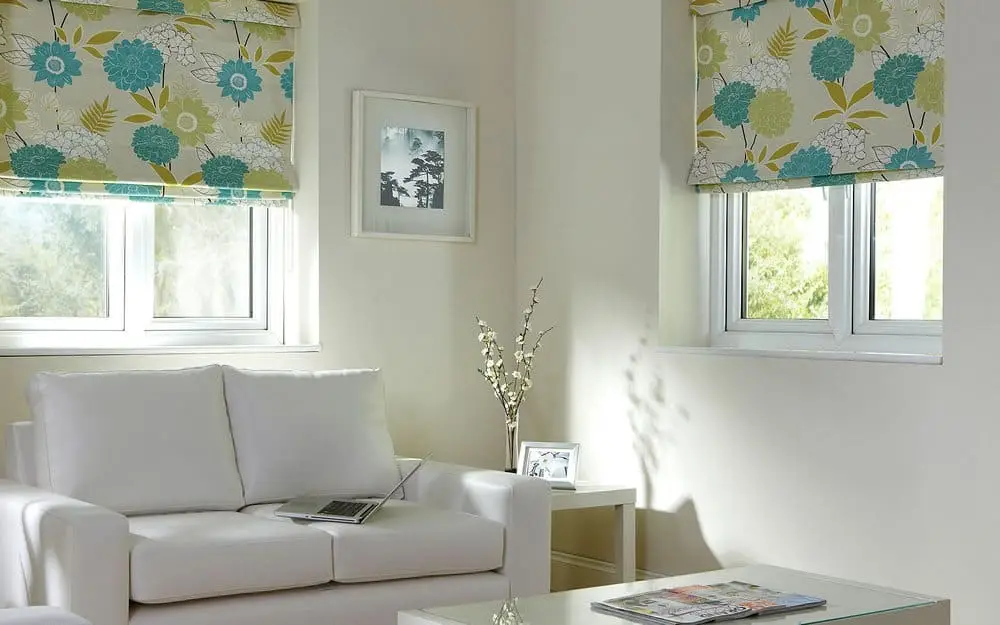
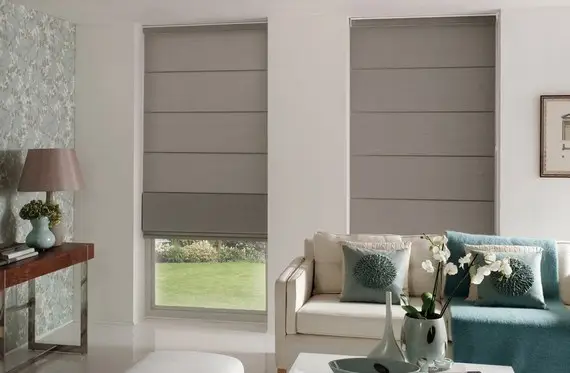
In practice, fabric choice matters more than the blind itself. The same system can feel completely different depending on material, density, and colour.
Light fabrics:
- keep the room bright
- maintain privacy during the day
- work well in living and dining spaces
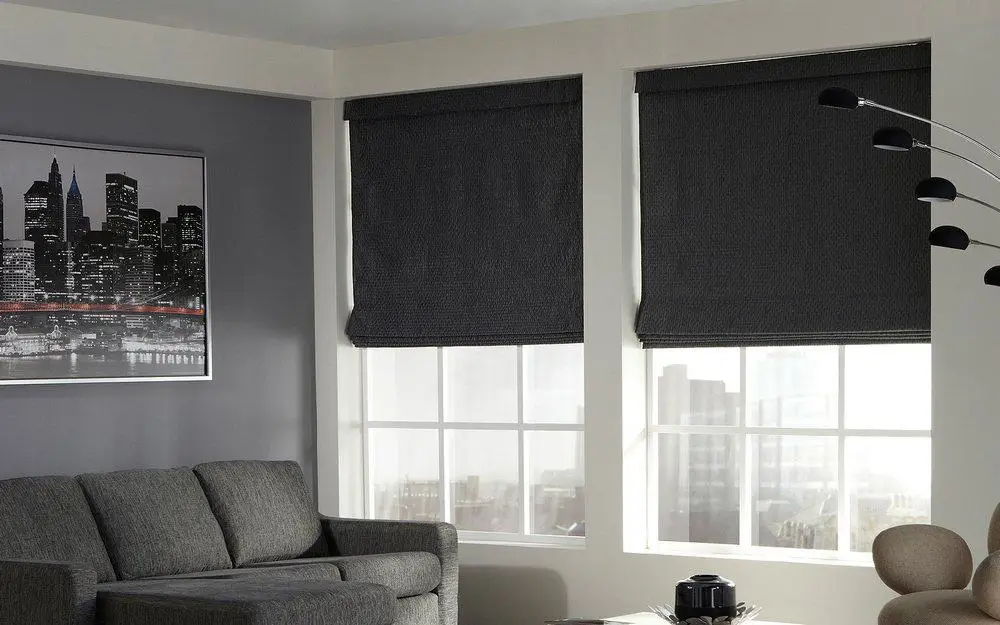
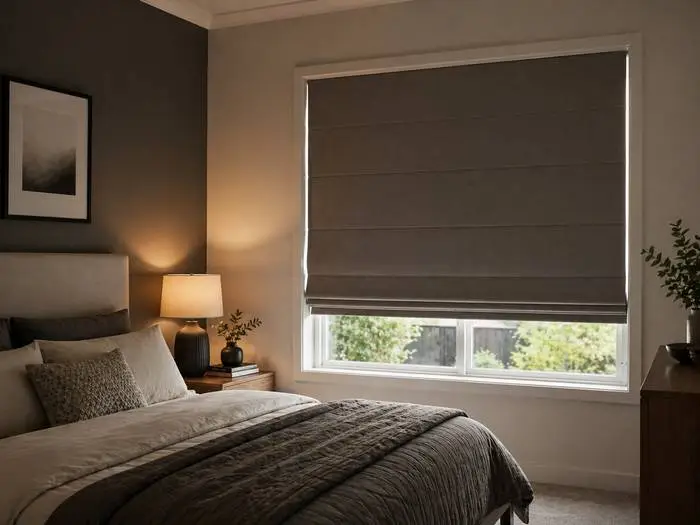
Heavier or blockout fabrics:
- reduce glare and heat
- improve comfort in bedrooms
- create a more enclosed feel
Textured fabrics:
- add depth without overwhelming the room
- work better than bold patterns in most interiors
After choosing fabric, maintenance becomes part of long-term usability. Regular care is simple, but the wrong approach can damage the material. If you’re unsure about proper care methods, it’s worth reviewing how to clean fabric Roman blinds to avoid damaging the fabric over time.
Where Roman Blinds Work Best (and Where They Don’t)
Roman blinds are highly versatile, but not universal.
They perform best in:
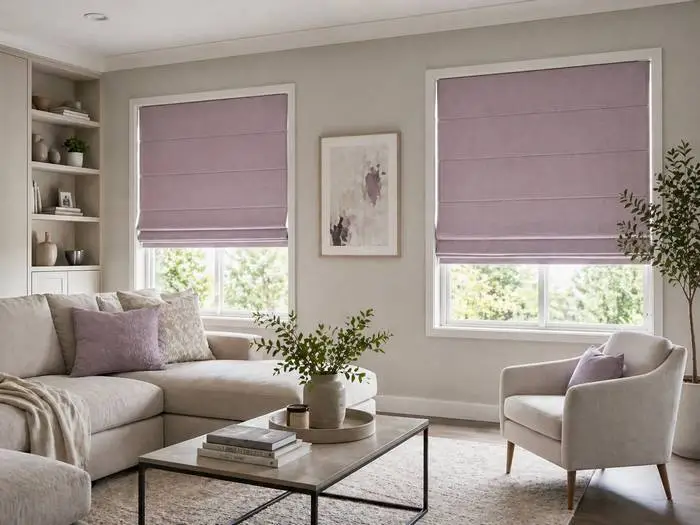
- living rooms where softness and aesthetics matter
- bedrooms where fabric adds comfort
- dining areas with consistent interior styling
- standard-sized windows
They are less suitable for:
- bathrooms or laundries without moisture-resistant fabrics
- very large windows where fabric weight becomes an issue
- spaces that require constant adjustment of light during the day
Another overlooked limitation is window shape. Roman blinds are designed for rectangular openings and do not adapt well to angled or unusual windows.
Design Choices That Age Well Over Time
One of the most common mistakes is choosing Roman blinds based on trends rather than longevity.
In most interiors, the following approach works better:
- neutral tones instead of strong colours
- subtle textures instead of busy patterns
- alignment with wall colour rather than contrast
This reduces visual fatigue and makes it easier to update the room later without replacing the blinds.
Roman blinds are often part of a larger composition — walls, furniture, flooring — and not a standalone feature.
What to Think About Before Installation
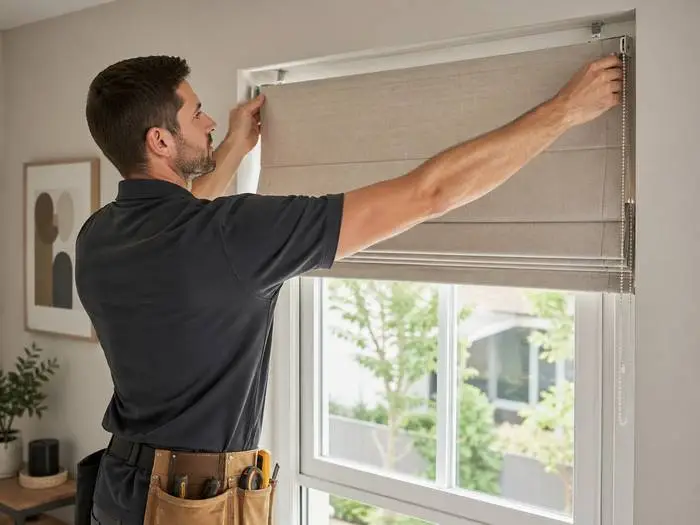
Even though Roman blinds look simple, installation decisions affect how they function long-term.
Mounting position changes everything. An inside mount creates a cleaner look but may allow more light gaps. An outside mount improves coverage but becomes more visually dominant.
Accurate measurements are critical, especially for inside mounts where even small errors are visible. If you’re unsure how to get it right, it’s worth checking how to measure blinds correctly before making a final decision.
Operation method also matters:
- chain systems are simple and reliable
- cordless options improve safety and appearance
- motorised systems are useful for hard-to-reach windows
For more complex setups or larger windows, installation quality directly affects how smoothly the blinds operate over time. In these cases, professional help with internal blinds installation can make a noticeable difference in long-term performance.
Everyday Use and What Changes Over Time
Roman blinds are generally easy to live with, but their behaviour becomes more noticeable with daily use.
Over time you may observe:
- slight fabric creasing depending on material
- changes in fold shape
- gradual wear in lifting mechanisms
These are normal and usually do not require replacement. In many cases, adjustments or small repairs are enough to restore proper function, especially when handled through timely blinds repairs rather than replacing the entire system.
Regular maintenance helps extend lifespan, especially in homes with higher dust levels or frequent sun exposure.
When Roman Blinds Are a Smart Choice
Roman blinds make sense when the goal is to create a comfortable, visually balanced space rather than maximise technical performance.
They work particularly well if:
- the interior relies on soft materials and textures
- moderate light control is sufficient
- the window is part of the room’s visual design
They are less effective when:
- precise light control is required throughout the day
- maximum daylight exposure is important
- the window size pushes the limits of fabric systems
What Actually Matters When Choosing Roman Blinds
Roman blinds are often chosen for their appearance, but their long-term value depends on how well they fit the way a space is actually used.
If the priority is a softer interior, balanced light, and a more integrated look, they tend to work very well. But if the expectation is precise control or maximum openness of the window, the result may feel different from what was initially imagined.
In most cases, the outcome is defined not by the system itself, but by the decisions made before installation — fabric, sizing, and placement. Getting these right makes the difference between something that simply looks good and something that continues to work comfortably every day.