Quote request
Where Panel Blinds Work Best in Modern Interiors
When people first come across panel blinds, they often think of them as just another window covering option. In reality, their role in modern interiors is much broader. They are typically selected not because they are trendy, but because they solve very specific problems that other blinds or curtains struggle with.
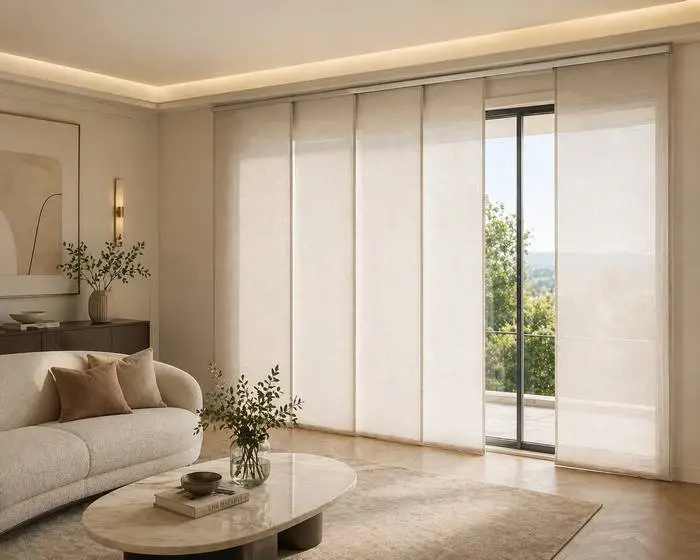
Instead of focusing on product features alone, it makes more sense to look at how panel blinds behave in real spaces. Their sliding structure, clean lines and ability to cover large areas make them particularly suitable for layouts that are common in contemporary Australian homes, especially where wide glazing and open-plan living are involved.
Why Panel Blinds Are Designed for Large Openings
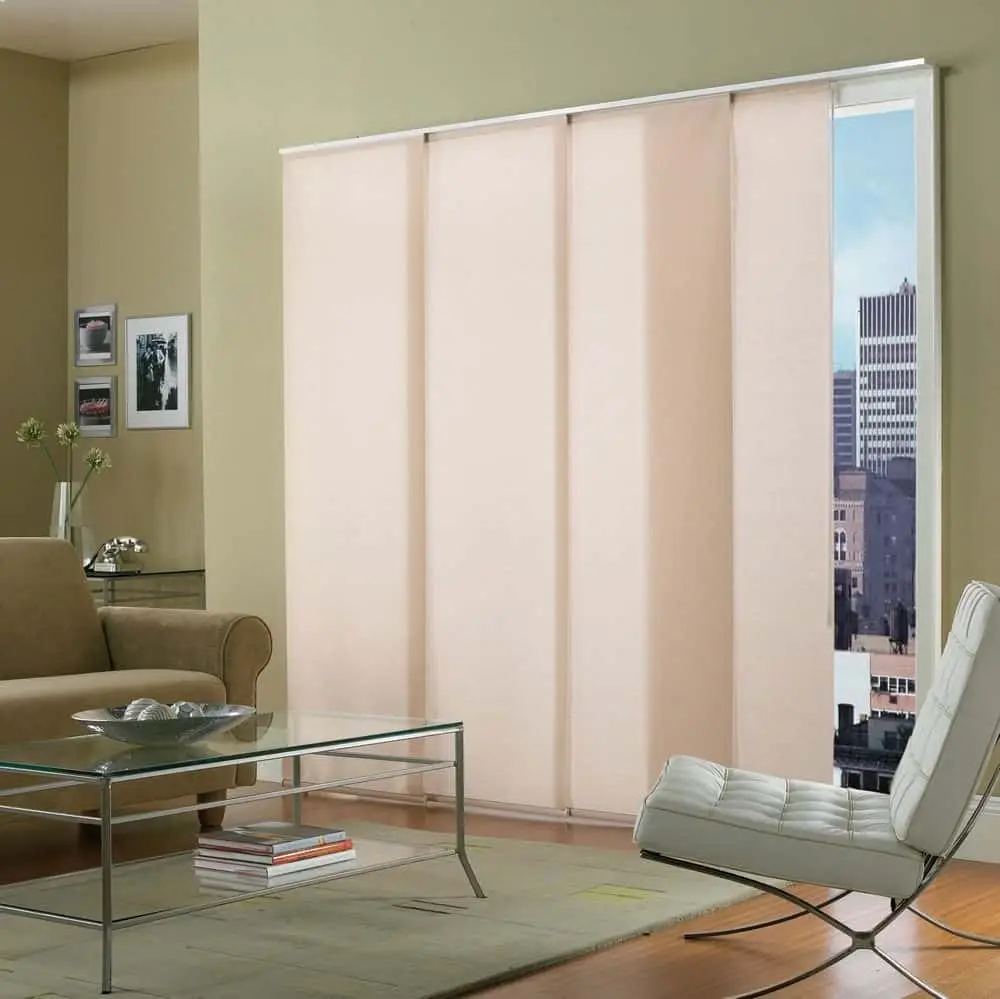
One of the main differences between panel blinds and more traditional systems is how they move. Rather than lifting up or tilting, panels glide horizontally along a track. This creates a more stable and controlled way to manage wide surfaces.
In practical terms, this means large windows no longer need to be treated as a single unit. Instead, they can be divided into sections that are easy to adjust depending on the time of day or level of privacy required.
This becomes especially important in living rooms where full sunlight may be desirable in the morning but needs to be softened later in the day. With panel systems, you can partially cover the window without losing access to natural light completely.
A Practical Solution for Sliding Doors and Everyday Use
Sliding and bi-fold doors present a common challenge. Many types of blinds interfere with movement or require constant adjustment. Panel blinds follow the same direction as the door itself, which makes them more intuitive to use.
Because the panels move sideways, they allow:
- quick and unobstructed access to outdoor areas
- consistent alignment with door frames
- less wear compared to lifting mechanisms
This is one of the reasons they are often seen in spaces that connect indoor and outdoor areas, such as patios or terraces. The system works with the architecture rather than against it.
Using Panel Blinds Beyond Windows
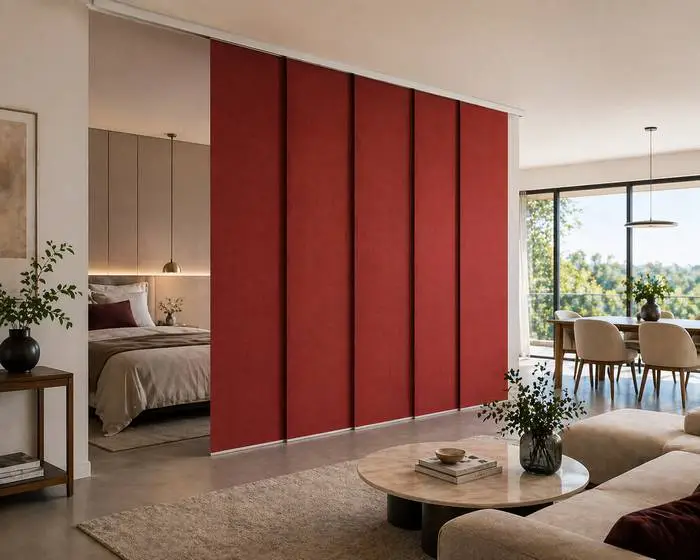
Another reason panel blinds continue to grow in popularity is their flexibility. They are not limited to covering glass surfaces. In many homes, they are used as a lightweight way to divide space.
This can be particularly useful in open-plan layouts where there is a need to create temporary separation without installing permanent walls. For example, a living area can be visually separated from a dining space, or a home office can be screened off when not in use.
Unlike fixed partitions, panel blinds can be opened fully when not needed, which helps maintain the sense of space. This balance between openness and privacy is difficult to achieve with more rigid solutions.
Light Control That Feels Natural Rather Than Mechanical
Panel blinds are not typically chosen for complete blackout performance. Their strength lies in how they manage light gradually.
Depending on the fabric, they can:
- reduce glare without darkening the room too much
- soften direct sunlight while keeping interiors bright
- provide privacy without blocking the outside view entirely
This creates a more comfortable environment, especially in spaces where people spend extended periods of time, such as living rooms or home offices. Instead of constantly adjusting blinds throughout the day, the panels allow for a more stable lighting condition.
How Panel Blinds Influence Interior Design
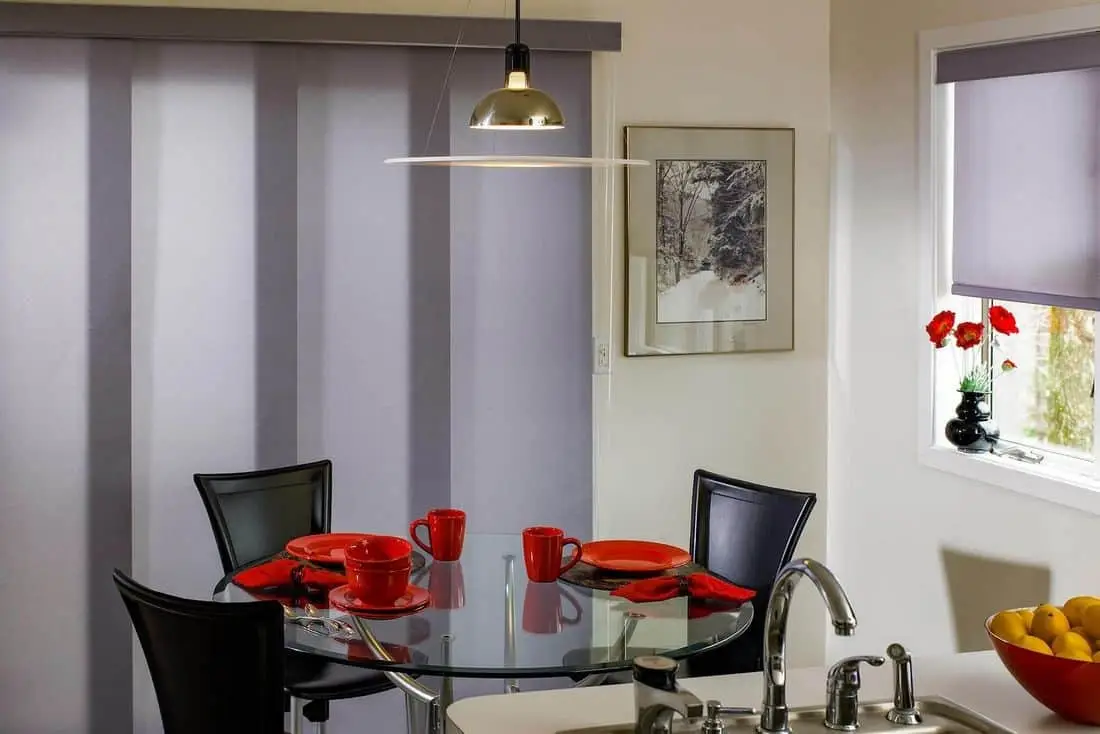
From a visual perspective, panel blinds introduce structure without adding unnecessary detail. Their vertical lines can make a room feel more organised and balanced, particularly when used across wide openings.
They tend to work best in interiors that favour:
- clean architectural lines
- neutral or coordinated colour palettes
- minimal decorative clutter
Because the panels are large, the fabric choice becomes more noticeable than with smaller blinds. Subtle textures and muted tones often produce a more refined result than bold patterns.
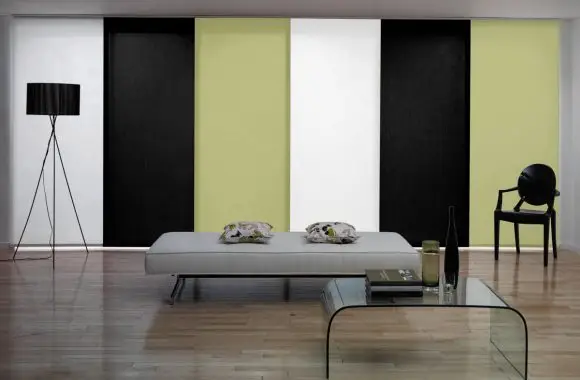
At the same time, panel blinds can also be used as a design feature if contrast is required. This flexibility allows them to adapt to different interior styles without dominating the space.
What to Consider Before Choosing Panel Blinds
While panel blinds are versatile, their performance depends heavily on proper planning. Several practical aspects should be considered before installation.
The first is available wall space. Since panels stack to one side when open, there needs to be enough room for them to move freely. Without this, the usable opening may be reduced.
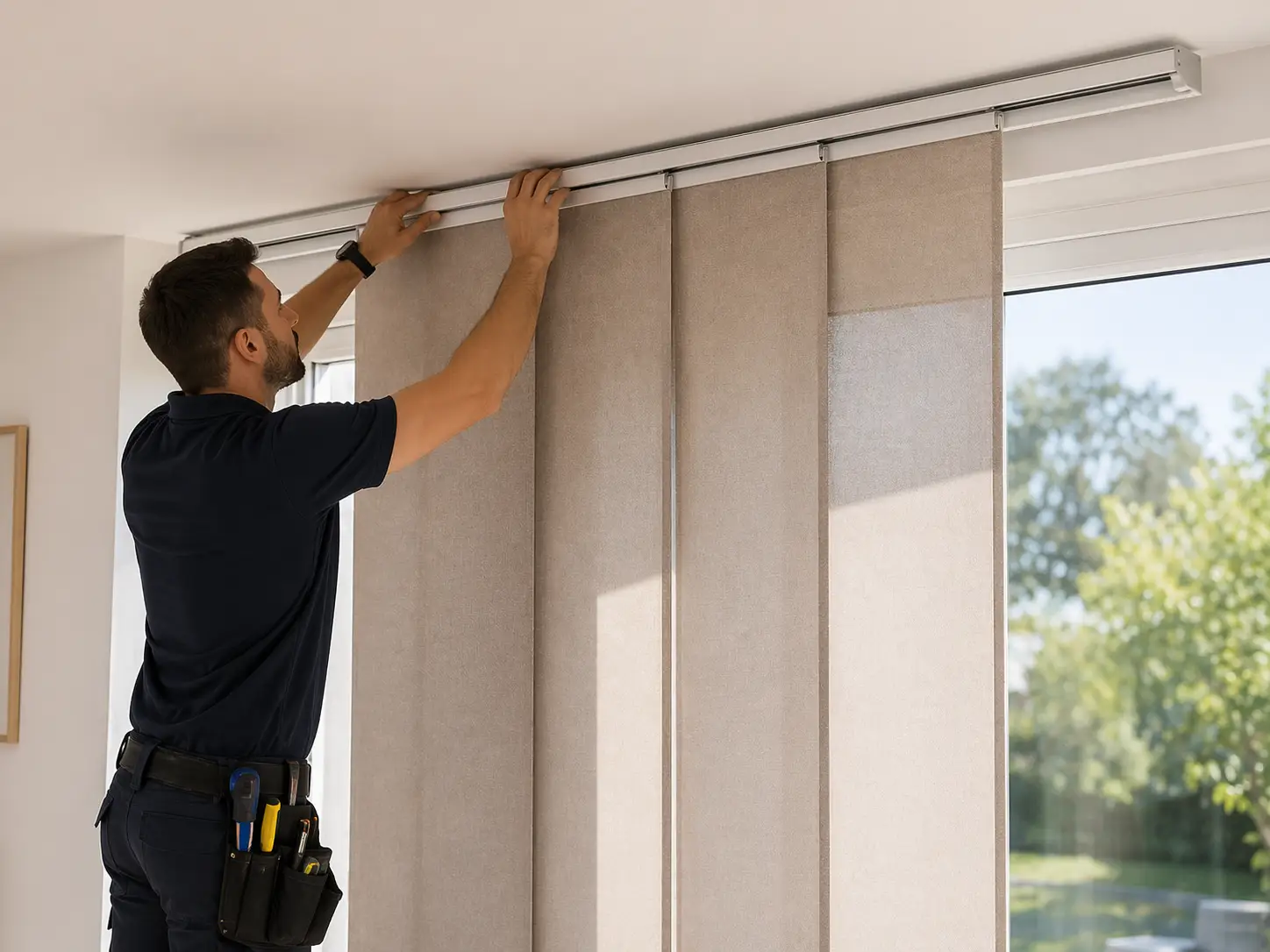
Track placement is another important factor. Ceiling-mounted tracks create a cleaner and more integrated look, especially in modern interiors. Wall-mounted options can still work well, particularly in retrofit situations where ceiling installation is not possible.
Fabric selection also plays a key role. Lighter materials allow more daylight to pass through, while denser fabrics increase privacy and reduce glare. The right choice depends on how the space is used throughout the day.
Accurate sizing is critical for smooth operation and proper alignment. Even small measurement errors can affect how the panels slide and stack. For this reason, it is recommended to review measure of blinds before making any decisions.
For larger openings or more complex layouts, professional installation can make a significant difference in long-term performance. In such cases, using professional blinds installation helps ensure the system operates correctly from the start.
Maintenance and Long-Term Reliability
One of the advantages of panel blinds is that they are relatively easy to maintain. Unlike more intricate systems, they have fewer moving parts and a straightforward structure.
Regular care usually involves light cleaning and occasional checks of the track system. Over time, components may require adjustment, especially in high-use areas such as sliding doors.
If any issues develop, they are often related to alignment or wear rather than the fabric itself. These problems can typically be resolved without replacing the entire system. In such situations, blinds repairs can restore functionality and extend the lifespan of the blinds.
When Panel Blinds May Not Be the Right Fit
Although panel blinds are highly adaptable, they are not suitable for every situation. Smaller windows may not benefit from their scale, and in some cases, other types of blinds can provide a more proportionate solution.
They may also be less effective where complete blackout is required, as slight gaps between panels can allow light to pass through. In interiors with a more traditional or decorative style, alternative window treatments may integrate better visually.
Understanding these limitations helps ensure the final result aligns with both functional needs and design expectations.
Bringing Function and Space Together
Panel blinds are best understood as a solution for managing space, not just covering windows. Their ability to handle wide openings, adapt to different layouts and provide controlled light makes them particularly relevant in modern homes.
When chosen with the right application in mind, they offer a balance between practicality and design that is difficult to achieve with more conventional options.